Not Tokyo, Not the Countryside: Why Mid-Size Japanese Cities Are Quietly Rewriting Anime's Playbook

Photo by Photo by Wenhao Ruan on Unsplash on Unsplash
The Map Is Changing
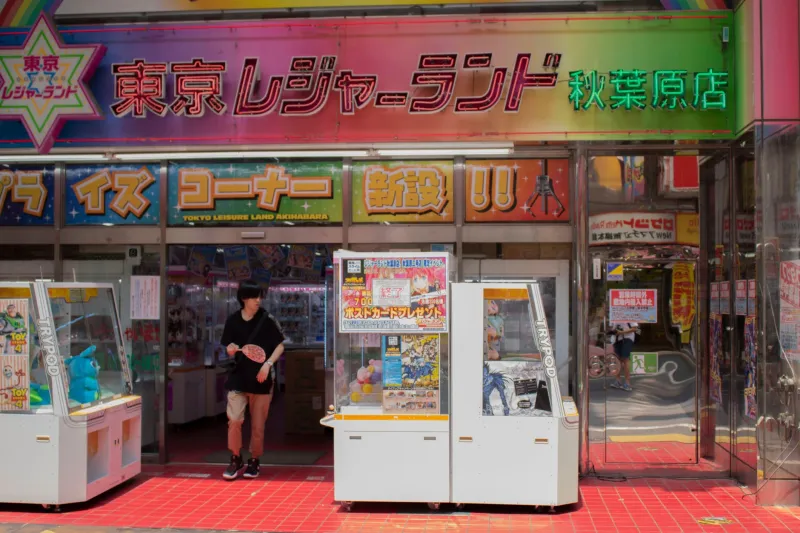
For decades, anime geography followed a pretty predictable script. You either got the full-throttle sensory overload of Shibuya crossing, Akihabara's electric backstreets, or Shinjuku's labyrinthine train station — or you got the opposite: a quiet fishing village, a mountain town blanketed in snow, a rice paddy stretching to the horizon. Tokyo or tranquility. Pick one.
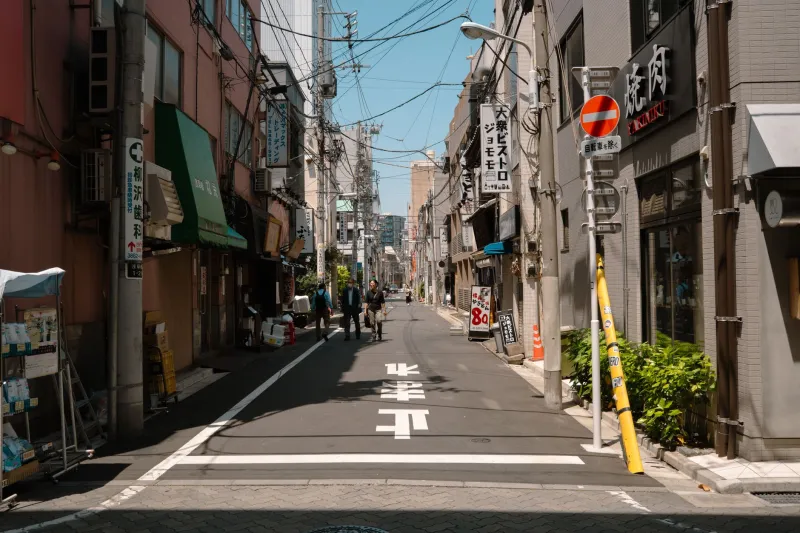
But scroll through recent seasonal releases and something feels different. The backdrops are starting to look familiar in a way that's harder to place. Wide commercial streets lined with chain restaurants and mid-rise apartments. Train platforms that aren't quite metropolitan but definitely aren't rural. Shopping centers with department stores, game centers, and ramen spots all stacked under one roof. These are the spaces millions of Japanese people actually live in — and anime is finally catching up.
Cities like Tachikawa, sitting about 25 miles west of central Tokyo in the Tama area of western Tokyo Metropolis, represent this new creative frontier. Close enough to the capital to have cultural gravity, independent enough to have its own identity, and dense enough to feel lived-in without being overwhelming. It's the kind of place that anime, for most of its history, kind of forgot about.
Why Creators Are Looking West of the Yamanote Line
The shift isn't accidental. Several forces are converging to make mid-size cities more attractive to anime studios and the writers pitching stories to them.
For one, demographics matter. Japan's storytelling industry is increasingly aware that its audience — both domestically and globally — doesn't necessarily identify with either the hyper-urban or the deeply rural. A huge chunk of Japanese viewers grew up in exactly these kinds of in-between spaces: commuter cities, regional hubs, places with personality but not postcard fame. Setting a story in Tachikawa or a city like it isn't a creative compromise. It's a direct line to a massive underserved audience.
There's also a practical side. Pilgrimage tourism — the phenomenon where fans travel to real-world locations featured in anime — has become a legitimate economic driver in Japan. Rural locations like the town that inspired Ano Hi Mita Hana or the coastal city behind Iroduku have seen measurable tourism bumps after their associated series aired. Local governments have noticed. Cities like Tachikawa have infrastructure, accessibility, and tourism boards willing to partner with production studios in ways that remote villages simply can't.
And then there's the storytelling argument, which might be the most compelling one of all.
The Suburb as Dramatic Space
There's a particular kind of tension that only a mid-size city can generate. It's not the anonymous freedom of a massive metropolis, where characters can disappear and reinvent themselves. And it's not the tight-knit pressure of a small town, where everyone knows everyone's business. Mid-size cities occupy an interesting middle ground: familiar enough to feel like community, large enough to feel like you could slip through the cracks if you wanted to.
That's rich dramatic territory. A teenager navigating high school social hierarchies hits differently when the setting is a recognizable train-adjacent suburb rather than an idealized rural idyll. A story about young adults stuck between ambition and comfort lands harder when the backdrop is a place that's neither launching pad nor dead end — just real, textured, specific life.
Creators who have set work in Tachikawa or the broader Tama region frequently cite the area's visual variety as a draw. You've got Showa Kinen Park's seasonal grandeur sitting alongside brutalist government buildings and the cheerful chaos of the IKEA-adjacent commercial strip. That visual range gives animators and directors something to work with — contrast, mood, the ability to shift a scene's emotional register just by changing which block a character is walking down.
American Fans Are Noticing
Here in the US, something interesting is happening with how fans engage with these location-specific anime. The pilgrimage impulse — always strong in dedicated fan communities — is starting to extend beyond the obvious destinations. Sure, Akihabara still draws crowds. But fan forums and travel subreddits are increasingly full of threads asking about Tachikawa, about the Tama area, about how to build a trip around the less-Instagrammed corners of greater Tokyo.
Part of this is the natural maturation of the Western fan base. Fans who took their first trip to Japan five years ago and hit all the famous spots are now planning second and third trips with more specific agendas. They want to stand on the actual platform, eat at the actual ramen shop, see the actual view from the overpass. Mid-size cities offer that experience without the shoulder-to-shoulder tourist density of central Tokyo.
Tachikawa, specifically, has a lot to offer this kind of visitor. It's easy to reach from the city center, has genuine neighborhood character, and — crucially for anime fans — has a growing ecosystem of shops, arcades, and cultural venues that cater to the fandom without being purely transactional about it. It feels like a place where people actually live and love this stuff, not just a retail zone designed to extract tourist dollars.
What This Means for the Canon
Here's the bigger question worth sitting with: if anime increasingly sets its most emotionally resonant stories in places like Tachikawa rather than the iconic urban landmarks or picturesque countryside, does that change what we consider the 'authentic' heart of the genre?
For a long time, there was an implicit hierarchy. Tokyo settings read as cosmopolitan, aspirational, modern. Rural settings read as traditional, nostalgic, 'truly Japanese' in some essentialized sense. Mid-size cities didn't fit cleanly into either category, so they often got flattened into generic backgrounds — the unnamed suburb that could be anywhere.
That's changing. When creators take the time to render a specific mid-size city with real detail and affection, it stops being generic. It becomes a place with its own claim on the anime imagination. Tachikawa isn't a stand-in for somewhere more famous. It's the point.
For American fans trying to understand what contemporary Japanese life actually looks like — not the tourist version, not the historical drama version — these mid-size city anime might be the most honest window available. And the fact that Tachikawa is at the center of this shift? That's not a footnote. That's the headline.