Tokyo Nights, Tachikawa Style: The After-Dark Scene That Locals Have Been Keeping to Themselves
Why Tachikawa After Dark Hits Different
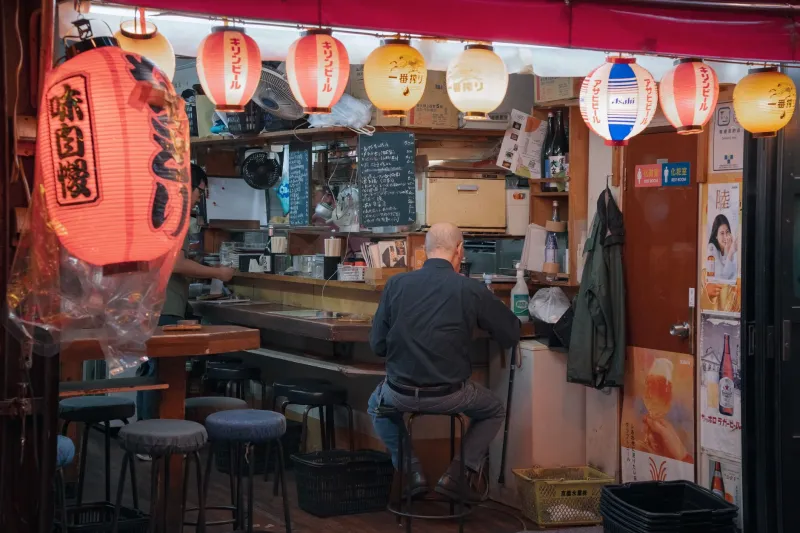
Here's a scenario that plays out more than you'd think: a group of Tokyo residents, tired of paying ¥1,800 for a cocktail in a Roppongi bar designed to impress foreigners, ends up on the Chuo Line heading west. They get off at Tachikawa. They find a basement izakaya with cheap highballs, a karaoke spot that doesn't have a two-drink minimum enforced by a velvet rope, and a themed bar run by a guy who is clearly doing it because he loves the concept, not because he's trying to maximize table turns.
They stay until the first train.
This is increasingly how Tachikawa's nightlife gets discovered — not through recommendations or review apps, but through word of mouth and the simple logic of: this is more fun, and nobody here is performing for a camera.
For American visitors who've done the Shibuya-Shinjuku-Roppongi circuit and found it loud in the wrong ways, Tachikawa's after-dark scene offers something that's genuinely hard to find in central Tokyo: a nightlife ecosystem that exists for the people in it.
Karaoke, But Make It Interesting
Karaoke in Japan isn't what most Americans picture. It's not a stage, it's not a crowd watching you, it's a private room with your friends and a song catalog that goes several hundred thousand tracks deep. That format is everywhere. What makes Tachikawa's karaoke scene stand out is the range of niche options that have developed around it.
There are spots near the station that cater specifically to anime and J-pop fandoms — rooms decorated with character goods, song libraries weighted heavily toward anime openings and endings, and staff who will absolutely not judge you for spending three hours exclusively on Evangelion and Gundam theme songs. This is not a gimmick. This is the clientele, and the rooms are set up accordingly.
On the other end of the spectrum, a few venues have leaned into the late-night, low-key drinking-den angle — karaoke rooms with better-than-average cocktail menus, dim lighting, and a vibe that's closer to a speakeasy than a family entertainment center. These spots tend to run later, attract a slightly older crowd, and are where you go when you want karaoke without the fluorescent lighting.
One manager at a mid-sized karaoke complex near Tachikawa's north exit put it simply: "Our customers aren't tourists. They're people who come back every week. We know what they want."
The Themed Bar Scene Is Genuinely Committed
Let's be honest about themed bars for a second. In a lot of cities — and in some parts of Tokyo — themed bars are a tourist product. The theme is a wrapper around a mediocre drink menu and a high cover charge. You know the type.
Tachikawa's themed bars are not that. The distinction is operator motivation: the people running these spots are fans first and bar owners second, and that comes through in ways that are hard to fake.
There's a small bar in the blocks west of the station that runs on a rotating anime and manga theme — the decor changes every few months, the cocktail menu is built around whatever the current theme is, and the owner clearly has opinions about the source material. It draws a mix of hardcore fans and curious regulars, and the conversation level on a Friday night is genuinely impressive. This is a place where people are actually talking to each other.
Separately, a few spots have leaned into retro-gaming and Showa-era nostalgia aesthetics — old arcade machines as decor, cocktails named after classic game characters, playlists that hit like a time machine to 1992. These work because they're sincere. The owners grew up with this stuff.
A Scene That's Actually Inclusive
Something worth saying directly: Tachikawa has a small but genuinely welcoming queer bar scene that doesn't get nearly enough attention. A few venues in the area have established themselves as LGBT+-friendly spaces that serve the local community rather than operating as novelty destinations.
For American visitors — especially those traveling solo or in queer friend groups — these spots offer something valuable: a place to land where the welcome is real and the crowd is mixed in a good way. They tend to be smaller, less flashy than the more famous queer venues in Shinjuku Ni-chome, and significantly less expensive. The regulars are mostly locals, and new faces are treated well.
This is the kind of thing that doesn't show up in guidebooks because it's not built for guidebooks. It's built for the people who need it.
Pop-Ups and the Experimental Edge
One of the more interesting developments in Tachikawa's nightlife over the past few years is the growth of experimental pop-up bars and one-night event spaces. These are harder to track down by definition — they exist on social media, through LINE group chats, and via the kind of underground word-of-mouth that requires actually knowing someone.
But if you're in Tachikawa and paying attention, you'll notice them: a bar that operates out of a gallery space for one weekend, a cocktail pop-up themed around a specific film director's work, a late-night ramen and natural wine pairing that sounds absurd and works completely. These events draw a creative crowd — artists, musicians, the kind of people who work in interesting jobs and spend their nights accordingly.
Following Tachikawa-based accounts on Instagram and Twitter/X before your trip is the best way to get plugged in. The local creative community is active online and generally happy to share what's happening.
Practical Notes for a Tachikawa Night Out
A few things to keep in mind before you head out:
Last train is your deadline. Tokyo trains stop running around midnight to 1 a.m. depending on the line. Know your last train time, or know that you're staying until the first train at around 5 a.m. — which, honestly, is a legitimate Tachikawa night out strategy.
Cash still rules. Many of the smaller bars and karaoke spots operate cash-only or have unreliable card readers. Hit a convenience store ATM before you start the night.
Cover charges are common. A lot of bars charge a small table fee (usually ¥500-¥1,000) that includes a snack. This is normal and not a ripoff — factor it in.
The area around the south exit is your starting point. Most of the nightlife clusters in the blocks immediately south and southwest of Tachikawa Station. Get oriented there and explore on foot.
Tachikawa after dark isn't trying to be Shibuya. That's the whole point. It's trying to be itself — and on a good Friday night, that's more than enough.