Eat Like a Tachikawa Local: The Izakayas and Late-Night Spots You Won't Find in Any Guidebook
Let's be real about something: eating well in Tokyo doesn't require a reservation six months in advance or a budget that would cover a week in Paris. Some of the most satisfying meals you'll have in this city happen at small, unpretentious places where the owner knows every regular by name, the menu hasn't changed much in fifteen years, and the food is just quietly, consistently excellent.
Tachikawa is full of these places. The neighborhood's dining scene doesn't get the ink that Ginza's Michelin-starred temples or Shinjuku's memory-lane drinking alleys receive, but that's honestly part of the appeal. The izakayas and late-night joints listed here are where actual Tachikawa residents go — not because they've settled for less, but because these spots genuinely deliver.
A quick note for first-timers: an izakaya is roughly the Japanese equivalent of a neighborhood bar that takes its food seriously. Think small plates, cold draft beer, warm sake, and the kind of easy, unhurried atmosphere where two hours disappear without anyone noticing. Most are casual, most are affordable, and almost all of them are significantly better than anything you'd find at a comparable price point back home.
Furusato-ya: The Izakaya That Refuses to Change
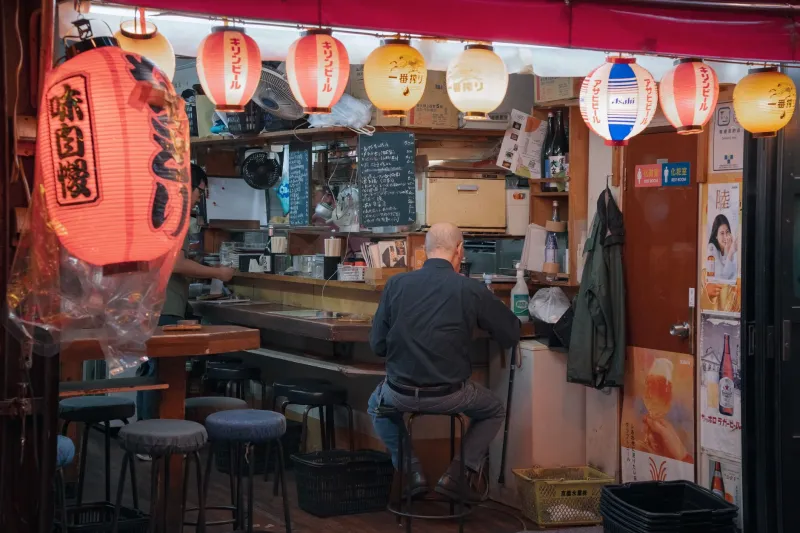
Furusato-ya has been operating out of the same narrow space about a seven-minute walk from Tachikawa Station's south exit for over thirty years. The interior looks like it hasn't been renovated since the bubble economy — low wooden tables, paper lanterns, walls covered in handwritten menu cards — and that's entirely intentional. Owner Kenji Mori, who inherited the place from his father, is deeply skeptical of renovation.
"When people come back after ten years, I want them to feel like nothing has changed," he says, refilling a customer's glass without being asked. "That's the point."
The food backs up the philosophy. Mori's chicken karaage — bite-sized pieces of thigh meat, double-fried until the crust shatters and the interior stays juicy — is genuinely one of the best versions of the dish you'll encounter anywhere. His dashimaki tamago, a rolled egg omelet cooked in a rectangular pan with careful attention to the dashi broth folded into it, is the kind of thing that makes you understand why Japanese home cooks treat egg cookery as a serious skill. Order both. Order the cold tofu too, which arrives with a small pile of freshly grated ginger and a pour of good soy sauce. It sounds simple because it is, and it's perfect.
Budget around ¥2,500–3,500 per person with drinks. Cash only. Closed Mondays.
Noodle Bar Shio-Kaze: Ramen After Midnight
Shio-kaze ("salt wind") opens at 11 p.m. and closes when the soup runs out, which is usually sometime around 4 a.m. It seats eleven people at a single counter, and on weekends there's almost always a line outside. The menu is a single page: four ramen variations, all built on the same clear, deeply savory shio (salt) broth that owner and chef Akemi Tanaka has been refining for over a decade.
Tanaka is one of the relatively rare women running a solo ramen operation in Tokyo, a fact she's aware of and somewhat tired of being asked about. "People want to make it a story," she says, not unkindly. "But I just make ramen. The soup takes twelve hours. That's the story."
The signature bowl — thin noodles, sliced chashu pork, a soft-boiled egg, a single sheet of nori, and that extraordinary broth — is the one to order on your first visit. The broth has a clarity and depth that's hard to describe without sounding hyperbolic; it's clean and savory and somehow simultaneously light and rich. On cold nights, it is basically perfect.
For American visitors used to the richer, heavier tonkotsu broths that have become the default in US ramen shops, Shio-Kaze's style might initially read as restrained. Give it thirty seconds. The flavor builds.
Bowls run ¥950–1,200. No reservations, no substitutions, no Wi-Fi password. Pure focus.
Tori-Gin: The Yakitori Counter for Serious Eaters
Yakitori — grilled chicken skewers — is one of those dishes that looks simple from the outside and reveals enormous depth the more attention you pay to it. Tori-Gin, a six-seat counter operation run by the meticulous Hiroshi Genda, is the kind of place that resets your expectations for what the dish can be.
Genda sources his birds from a single farm in Yamagashi Prefecture and uses every part of the chicken across his menu, which changes based on what's available. The tsukune (chicken meatballs, grilled over binchotan charcoal) are a must — dense, juicy, served with a raw egg yolk for dipping that sounds weird to American visitors and converts approximately one hundred percent of them on first bite. The hearts and livers, if you're willing to go there, are handled with real skill: crispy outside, barely cooked within, seasoned with nothing but salt and the smoke from the charcoal.
Genda is quiet and precise behind the counter, focused entirely on the grill. The experience of eating here is almost meditative — you sit, you watch him work, you eat what he brings you, you drink cold Sapporo. It's one of the more calming dining experiences you'll have in a city that doesn't always prioritize calm.
Omakase (chef's choice) course runs ¥4,500–6,000 per person. Reservations strongly recommended; call ahead or have your hotel concierge assist.
Standing Bar Kotsu-Kotsu: The After-Work Ritual
Not every great spot in Tachikawa is a sit-down affair. Kotsu-Kotsu is a standing bar — what the Japanese call a tachinomi spot — that occupies a space about the size of a generous American bathroom near the station's east exit. It opens at 5 p.m. and is reliably packed with salarymen, construction workers, and the occasional off-duty chef by 5:30.
The concept is simple: cheap, cold highballs (whisky and soda, the definitive Japanese after-work drink), small plates of bar snacks, and a crowd that's uniformly in a good mood because the day is over and the drink is in hand. The potato salad — a staple of Japanese bar menus that Americans consistently underestimate — is made fresh daily and is genuinely excellent. The fried chicken skin skewers are aggressively good.
Kotsu-Kotsu is one of those places that doesn't translate easily on paper but makes complete sense the moment you walk in. It's loud, it's friendly, it's inexpensive, and it captures something real about how a lot of Japanese people actually decompress after work. Drinks start at ¥400. No English menu, but pointing works fine and the staff are patient.
A Few Practical Notes Before You Go
None of these places have a significant English-language presence online, which is partly the point. Google Translate's camera function handles Japanese menus with reasonable accuracy these days — use it freely without embarrassment. Most spots accept cash only, so hit an ATM before you head out for the evening. Konbinis (convenience stores) throughout Tachikawa have ATMs that accept foreign cards.
The general etiquette: wait to be seated, don't pour your own drink until someone else's glass is full, say "itadakimasu" before eating and "gochisosama deshita" when you leave. You'll get it slightly wrong and nobody will mind at all.
The best version of an evening in Tachikawa looks something like this: start at Kotsu-Kotsu around 6 p.m. for a highball and some bar snacks, move to Furusato-ya or Tori-Gin for a proper meal, and finish the night at Shio-Kaze when the ramen craving inevitably hits around midnight. It's a long evening and a deeply satisfying one, and it'll cost you a fraction of what a comparable night in central Tokyo would run.
That's the Tachikawa move. Now you know it.