Dubbed and Delivered: How American Voice Actors Are Building Fanbases in Japan
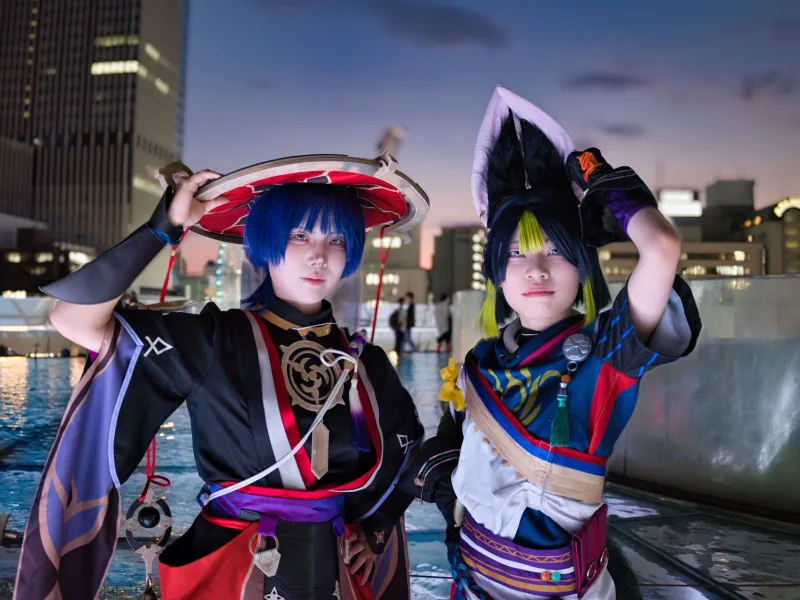
There's a version of this story that would have seemed like pure fiction ten years ago. An American voice actor — someone who recorded their lines in a studio in Los Angeles or Houston or New York — lands at Narita Airport, gets picked up by a handler, and walks into a fan event in western Tokyo where a crowd of Japanese enthusiasts are already chanting their character's name in English. That story is happening now. And venues in Tachikawa are part of why.
The Dub Was Always the Underdog
For a long time, the cultural hierarchy was pretty clear: Japanese voice performances were the original, the authentic article. English dubs were the compromise version — something you watched as a kid before you knew better, or something you tolerated when subtitles weren't an option. Even in the US, the sub-versus-dub debate carried a kind of gatekeeping energy that made dub fans feel like they owed someone an apology.
But streaming quietly blew that dynamic up. When Crunchyroll, Funimation, and Netflix started releasing dubbed versions faster — sometimes within days of a Japanese broadcast — the quality gap that used to define the conversation started closing in a hurry. Dubbing studios got more budget. Directors got more creative control. Voice actors got more takes. And audiences started noticing.
What nobody predicted was that Japanese audiences would start noticing too.
Why Japan Started Paying Attention
The short answer is social media, but the longer answer is more interesting. When clips of English dub performances started circulating on Japanese platforms — particularly standout moments from titles like Demon Slayer, Jujutsu Kaisen, and My Hero Academia — Japanese fans started engaging with them not as curiosity items but as genuine performances worth discussing on their own terms.
Part of it is generational. Younger Japanese fans grew up in a more globally connected media environment. English isn't the barrier it once was, and American pop culture — music, film, gaming — already had deep roots. Encountering an English dub of a beloved anime became less "foreign version" and more "alternate interpretation," which is a framing that fan culture is extremely comfortable with.
Dubbing directors and producers who work on major titles have talked openly about this shift in recent interviews. The consensus is consistent: the reverse flow of cultural appreciation wasn't something anyone planned for, but it's real, and it's accelerating.
Tachikawa as a Testing Ground
Here's where things get locally specific in a way that matters. Tachikawa has spent the last several years quietly building out a pop culture infrastructure that doesn't just serve tourists — it serves a local and regional Japanese audience that is genuinely curious about how their favorite properties exist in other languages and cultures.
Several venues in the area have started hosting what they're calling "English dub screening nights" — events where popular anime films or series episodes are screened in their English versions, often with Japanese subtitles, and sometimes followed by Q&A panels or discussion sessions. The crowds aren't exclusively international visitors. A meaningful portion are Japanese fans who want to experience a title they already love through a completely different performance lens.
It's a little like how American cinephiles seek out foreign-language versions of films they've only seen dubbed — except the curiosity is running in the other direction, and the venue is a stylized pop culture space in greater Tokyo rather than an art house theater in Brooklyn.
The Voice Actors Themselves
What's made this whole phenomenon more tangible is that American voice actors have started showing up. Convention culture in Japan has been expanding its international guest roster for a few years, but the reception that English-language anime VAs have been getting recently represents something qualitatively different from a standard celebrity appearance.
Actors who voice lead characters in major dub productions have described arriving at events expecting a polite, modest turnout and finding something much closer to the kind of frenzy that Japanese seiyuu — voice actors — experience at their own fan events. Fans with signs. Fans who can quote specific line readings. Fans who have clearly spent time with the English version not just as background noise but as a primary text.
For the voice actors themselves, it's a career-redefining experience. Dubbing has historically been one of the less glamorous corners of the voice acting world — steady work, but not the kind of thing that came with a fanbase in another country. That's changing, and the actors who've experienced it firsthand tend to describe it with the kind of barely-contained excitement that suggests they're still processing it.
What This Means for Production
The industry implications are significant and still unfolding. If English dub performances are being treated as artistically valid interpretations rather than functional translations, that changes the conversation around how much creative investment goes into producing them. Studios that might have previously treated dubbing as a downstream cost center have reason to reconsider that framing.
There's also a feedback loop developing between American voice actors and Japanese production teams that didn't really exist before. Some dubbing directors have described early-stage conversations with Japanese studios about character voice direction — not just "here's the script, make it work in English" but genuine dialogue about performance intent and character psychology. That's new.
For fans on both sides of the Pacific, the exciting possibility is an era of anime production that genuinely treats its international versions as something other than afterthoughts. Tachikawa's willingness to host dubbed screenings for Japanese audiences is a small but pointed signal that the appetite exists — and that the cultural wall between "original" and "localized" is more permeable than anyone assumed.
A Two-Way Street, Finally
Anime has always been a form of cultural export, but the exchange has rarely felt genuinely bilateral. Japanese creators made something, it traveled outward, and the response came back in the form of sales data and convention attendance. The idea that American voice performances could travel back — that they could land in Tachikawa screening rooms and generate the kind of fan energy usually reserved for the source material — is a different kind of exchange entirely.
It's messier and more interesting than the old model. And if you're someone who grew up defending your dub preferences to sub-only gatekeepers, it's also a little bit satisfying to watch unfold.