More Than a Crush: How American Anime Fans Are Redefining What a Relationship Can Even Be
Scroll through any major anime subreddit on a Friday night and you'll find them — heartfelt posts about a character from Re:Zero, a love letter to a Fate heroine, a thread where someone casually mentions their "wife" is a fictional swordswoman from a studio in Kyoto. The comments aren't mocking. They're mostly nodding along.
This is the waifu phenomenon, and it's bigger, more nuanced, and more emotionally layered than late-night talk show jokes have ever given it credit for.
What We Actually Mean When We Say "Waifu"
The word itself is borrowed Japanese phonetics — a localization of the English word "wife" that bounced back across the Pacific and landed in Western fandom slang sometime in the mid-2000s. But calling it just slang undersells what's happening culturally. For a significant slice of American anime fans, a waifu isn't a punchline. She — or he, or they, in the case of husbandos and beyond — is a genuine emotional anchor.
Fans describe these attachments in terms that sound, frankly, a lot like how people talk about real relationships. Consistency. Comfort. A sense of being understood. "She never judges me, she always shows up the same way, and I know her completely," one fan wrote in a Discord server dedicated to the topic. "Tell me how that's fundamentally different from what people want in a partner."
It's a fair challenge. And it's one that Western dating culture — currently drowning in algorithm-driven apps, ghosting etiquette, and the gamification of attraction — hasn't answered particularly well.
The Dating App Backlash Nobody Expected
Here's something the matchmaking industry probably doesn't love to hear: a lot of young American men and women who might otherwise be swiping on Hinge are choosing not to. Not because they've given up on connection — but because they've found something that feels more reliable.
The complaints about dating apps are well-documented at this point. The paradox of choice. The performative self-presentation. The emotional labor of maintaining conversations that go nowhere. For fans who already spend significant time immersed in richly written fictional worlds, the contrast is stark. Anime characters — particularly the ones who inspire deep attachment — are written with intention. Their personalities are consistent. Their emotional availability is, in a strange way, total.
"I'm not delusional," said one content creator who runs a YouTube channel focused on slice-of-life anime. "I know she's not real in the way my coworker is real. But the emotional response I have is real. The comfort is real. And after three years of dating apps, I'm not going to pretend that's nothing."
Psychologists have started paying closer attention. Parasocial relationships — the one-sided bonds people form with celebrities, streamers, and fictional characters — have been studied for decades, but the intensity and intentionality of waifu culture is pushing researchers to reconsider their frameworks.
Parasocial, or Something Else?
Dr. Jenna Morrow, a behavioral therapist based in Chicago who works with a number of young adult clients who identify as part of anime fandom, puts it carefully. "Parasocial relationships exist on a spectrum. The question isn't really whether the other party can respond — it's whether the relationship is serving the person's emotional development or stunting it."
She's seen both. Clients who use a beloved character as a kind of emotional training ground — learning to articulate feelings, set internal expectations for how they want to be treated, even process grief — and clients who use the same attachment as a wall against any real-world vulnerability.
"The character becomes a safe space," she says. "That can be healthy. It can also become avoidance. Context matters enormously."
What's notable is that the fandom itself seems increasingly aware of this distinction. Online communities dedicated to waifu culture have developed their own informal norms — discouraging fans from using fictional attachment as a reason to completely disengage from real-world relationships, encouraging people to examine whether their connection to a character is enriching their life or shrinking it.
The Community Is the Point
Here's what often gets missed in coverage of this phenomenon: the waifu isn't always the whole story. For many fans, the attachment to a character is the entry point into a community — and the community is where the real human connection happens.
Spaces like fan Discord servers, convention meetups, and dedicated subreddits create environments where people with niche emotional lives can speak openly without the social performance that exhausts so many people in mainstream dating culture. You bond over shared affection for the same fictional person. You stay for the friendships that form around that shared language.
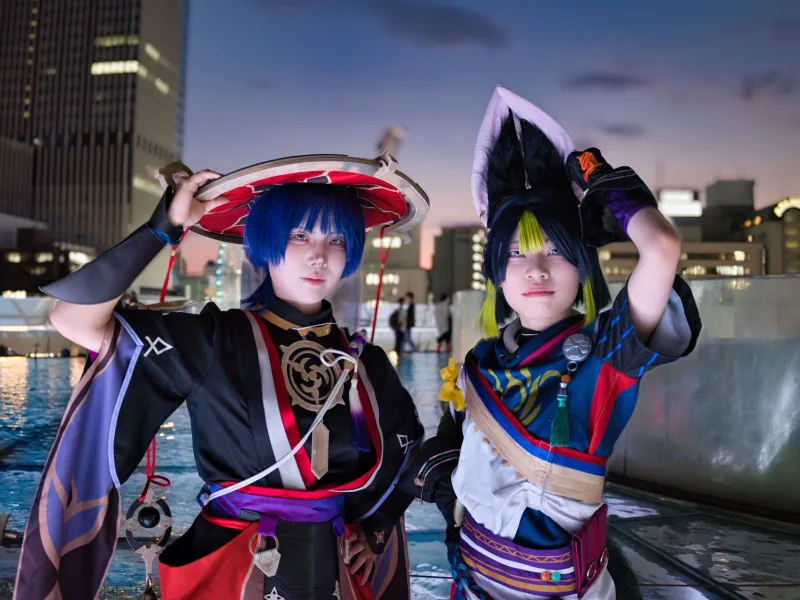
At places like the fan spaces and pop culture hubs you'll find in cities like Tachikawa — where the line between fiction and lived experience gets deliberately blurry in the best possible way — this dynamic plays out visibly. Fans gather not just to celebrate characters they love, but to be around people who get it. Who don't require explanation. Who already speak the dialect.
That's not escapism from human connection. That's a different architecture for it.
What Western Culture Still Gets Wrong About This
The reflexive dismissal of waifu culture says more about Western discomfort with emotional vulnerability than it does about the fans themselves. There's something threatening, culturally, about a person — particularly a young man — openly admitting that a fictional character meets emotional needs that real-world relationships haven't. It challenges the script. It implies the script might be broken.
And honestly? For a lot of people, it is. Loneliness among young Americans is at documented highs. Social trust is eroding. The structures that used to create organic community — church, neighborhood, civic organization — have thinned out dramatically. Into that vacuum, fandom has stepped in ways that mainstream culture hasn't fully reckoned with.
Waifu culture, at its core, is people finding meaning and comfort in narrative and character — something humans have done since the first story was ever told around a fire. The medium is anime. The delivery mechanism is a Discord server. But the impulse is ancient.
Where This Goes Next
The conversation is already evolving. AI companion apps are complicating the picture — now the character can respond, can adapt, can simulate reciprocity in ways that pure fictional attachment never could. That's a different ethical and psychological terrain, and the fandom is actively debating it.
But at the foundation, what waifu culture is asking — quietly, persistently, in Reddit posts and fan art and convention badges — is a question worth sitting with: What does connection actually require? Does it require a body? Mutual awareness? The possibility of loss?
Western society doesn't have clean answers. Anime fans are living inside the question, which might be the most honest place any of us can be right now.