Skipping the Subtitles: The American Fans Going Full Fluency to Get to Anime First

Somewhere between Duolingo streaks and immersion Discord servers, a segment of the American anime fandom quietly crossed a line. They stopped waiting.
Not waiting for the dub. Not waiting for the official sub. Not even waiting for the simulcast. They're watching new episodes raw — in Japanese, without subtitles — within hours of broadcast. They're posting reactions in Japanese on fan forums. They're joining Twitter spaces run entirely in a language that, statistically, most of them started studying less than three years ago.
This isn't a tiny niche. Language learning platform data, subreddit growth metrics, and the sheer volume of "learning Japanese for anime" content on YouTube all point to the same thing: a meaningful and accelerating chunk of the American fandom is treating Japanese fluency not as a bonus skill but as a prerequisite for the kind of fan engagement they actually want.
And that's starting to make some powerful people in the streaming industry quietly nervous.
What's Actually Driving the Push
The motivations aren't all the same, which is part of what makes this interesting.
For some fans, it's about speed. Simulcast subtitles have gotten fast, but they're not instantaneous, and official translations always involve compromise — localization choices, censorship considerations, platform-specific edits. Fans who've learned enough Japanese to follow dialogue at a basic level don't have to accept those trade-offs. They get the unfiltered version.
For others, it's about community access. The most active, most informed, most creatively engaged anime fan communities in the world are Japanese. Fan art drops on Pixiv before any Western platform picks it up. Speculation threads on 2channel and its successors move faster than anything on Reddit. Japanese fans who attend events like Comiket or regional cons in places like Tachikawa are sharing content and commentary that doesn't get translated, ever. If you want in, you need the language.
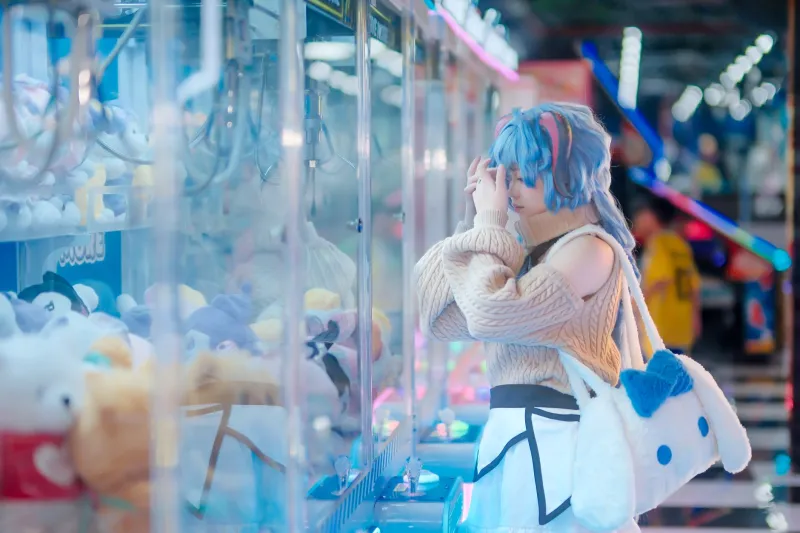
Then there's a third group, maybe the most interesting one: fans who started learning Japanese specifically to visit Japan and engage with the culture directly — to walk through Tachikawa, navigate a real arcade, read the menus, talk to shop staff — and discovered that the language skill transformed their relationship to the media too. Travel intent became cultural immersion became genuine fluency.
"I started studying because I wanted to be able to actually talk to people when I went to Japan," said one fan from Chicago who's now conversationally fluent after three years of study. "But then I realized I could just... watch the show. Like, actually watch it. And that changed everything."
The Underground Translation Layer
Parallel to the individual fluency push, something more organized has been developing: informal fan translation networks that operate faster than any official platform can.
These aren't the old-school fansub operations of the early 2000s, running on IRC and BitTorrent. They're leaner, faster, and more socially embedded. Fans with strong Japanese skills post real-time translation commentary on Discord while an episode airs. Clip compilations with crowd-sourced translations appear on social media within an hour of broadcast. Scene-specific translation threads break down nuanced dialogue that official subs frequently flatten.
None of this is strictly legal, and the major platforms know it exists. But the challenge isn't just enforcement — it's relevance. If a fan can get a more accurate, more contextually rich, more immediate translation through a Discord server full of dedicated volunteers, the official platform's subtitle track starts to feel like a product that's been optimized for the wrong things.
Streaming services have responded in a few ways. Faster simulcast rollouts, expanded language options, and occasional "translation notes" features are all attempts to close the gap. But they're playing catch-up in a race they didn't fully see coming.
What This Means for the Platforms
The streaming model for anime has always depended on a specific friction: most American fans don't speak Japanese, so official localization is genuinely valuable. Remove that friction — or let fans route around it themselves — and the calculus changes.
This doesn't mean the major platforms are suddenly in crisis. The majority of American anime viewers still want and need subtitles, and the convenience of a polished, legally available stream matters to most people. But the most engaged segment of the fandom — the early adopters, the community leaders, the people who drive conversation and discovery — is disproportionately represented among those pursuing fluency. Losing their loyalty, or even their dependence, has downstream effects on how shows get discovered and discussed.
There's also a merchandise and live event dimension. Fans who are fluent enough to engage with Japanese platforms directly are also more likely to buy from Japanese sources, attend events in Japan, and participate in the kind of regional fan culture that cities like Tachikawa have built their identity around. That spending doesn't flow through American streaming platforms at all.
The Language as the Experience
What's perhaps most striking about this trend is what it says about how deeply invested a portion of the American fandom has become — not just in the content, but in the entire cultural context around it.
Learning a language is hard. It takes hundreds of hours. It requires sustained motivation and a genuine reason to keep going. The fact that anime is providing that motivation for a statistically significant number of American adults is remarkable. It's also, arguably, the most sincere form of fan engagement possible.
For anyone planning a trip to Japan — to Tachikawa's arcades, to its anime-embedded neighborhoods, to the kind of experiences that don't translate well through a screen — that investment pays off in ways that go well beyond watching a show without subtitles. It opens a door into a culture that's been trying, in its own way, to let you in all along.