When the Map Becomes the Story: How Anime Locations Turned Tachikawa Into a Living Set
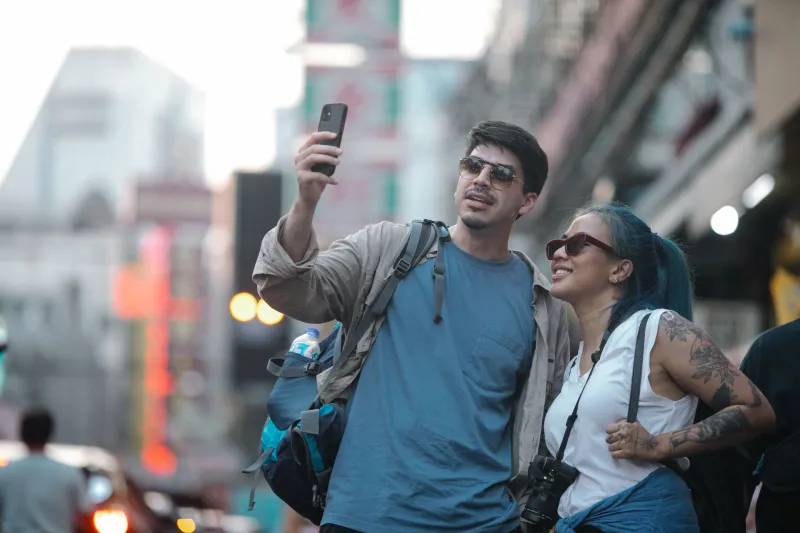
There's a moment every anime pilgrim knows. You're standing on a street corner, phone in hand, screenshot from episode four loaded up on your screen, and the angle just clicks. The vending machine is exactly where it was in the show. The utility pole in the background matches. The light hits the same way it did in the opening credits. For a second, the fictional world and the real one fold into each other, and you feel something that's genuinely hard to explain to anyone who hasn't been there.
That feeling — that specific, almost disorienting overlap between story and place — is no longer a happy accident. It's increasingly by design. And Tachikawa, a mid-size city about 25 miles west of central Tokyo, has become one of the clearest examples of how intentional that design has gotten.
From Background Dressing to Narrative Architecture
For years, anime productions used real locations the way most films do: as visual reference material. Artists would photograph a neighborhood, sketch the essential shapes, and then abstract it just enough to feel like a fictional world. The place informed the art, but the connection was loose — deniable, almost.
That approach has shifted significantly. Productions are now embedding specific, identifiable Tachikawa locations — the Showa Kinen Park pathways, the Faret Tachikawa public art installations, the particular geometry of the shopping arcades near the north exit — as load-bearing elements of their storytelling. A character's emotional arc resolves in front of a recognizable sculpture. A pivotal conversation happens in a café that still exists and still serves the same coffee.
This isn't accidental location scouting. Local tourism boards have quietly built relationships with production studios, offering logistical support, access, and in some cases co-promotional arrangements that benefit both sides. The city gets free advertising embedded in content that reaches millions. The production gets authentic texture that audiences increasingly notice and reward.
"Fans can tell when a location is generic versus when it's real," one Tachikawa tourism representative explained during a regional media briefing last year. "There's a different quality to the detail. It creates trust in the world."
The American Fan as Urban Archaeologist
On the other side of the Pacific, a particular kind of trip planning has become its own subculture. American fans — often working from dedicated wikis, fan-compiled Google Maps layers, and Discord servers organized by specific shows — are arriving in Japan with itineraries that would impress a location scout.
Take the growing community around what fans loosely call "coordinate hunting": matching exact GPS points to specific anime shots. These aren't casual sightseers. They've studied frame-by-frame. They know which direction the camera was facing. They've calculated the time of day based on shadow angles. Some make multiple trips, returning to catch a location in a different season that matches a specific episode's setting.
Several American fans who've organized Tachikawa-centered trips describe a similar experience: the city rewards this kind of attention in ways that more heavily trafficked destinations don't. Because Tachikawa hasn't been overrun by mass anime tourism the way Akihabara has, the locations still feel genuine. The ramen shop is still a ramen shop. The park bench is still just a park bench — until you recognize it.
"I've been to Tokyo four times," said one fan from Portland who's visited Tachikawa twice specifically for pilgrimage stops. "Tachikawa feels like the show is still happening there. Like you showed up between episodes."
The Economics Behind the Experience
What's actually happening economically is worth understanding, because it's more layered than it might seem.
Direct spending from anime tourists — accommodation, food, merchandise, transportation — is the obvious layer. But the more durable economic effect is reputational. Tachikawa has developed an identity as a place where the anime world and the real world are genuinely porous. That identity attracts not just individual fans but event organizers, merchandise pop-ups, and increasingly, international press coverage that positions the city as a destination worth planning around.
Local businesses have adapted, some more explicitly than others. A few shops near popular pilgrimage sites have leaned into their on-screen appearances with subtle nods — a framed screenshot, a small sign, a staff member who knows the show and can chat about it. Others prefer to stay exactly as they are, which is arguably the point: authenticity isn't manufactured, and fans can sense when it is.
The tourism board has also gotten smarter about timing. Coordinating local events and limited merchandise drops to coincide with new season releases or blu-ray announcements creates waves of visitor traffic that benefit the whole area, not just the most obvious stops.
Why Canon Is Starting to Follow the Map
Here's the part that's genuinely new: the relationship between fiction and place is starting to run in both directions.
Productions that set stories in Tachikawa are now, in some cases, making creative decisions based on what fans have already responded to. A location that became a pilgrimage hotspot after one season might get written into a more central role in the next. The feedback loop between audience behavior and storytelling is tightening.
This raises interesting questions about what "canon" even means when the story is partly being shaped by where fans show up. If thousands of people travel to a specific bridge because of a single scene, and the next season makes that bridge a recurring emotional anchor, is the story following the map or the map following the story?
For American fans planning their next trip, the answer probably doesn't matter much. The point is that the world is real, it's visitable, and Tachikawa has figured out how to make that visit feel like more than just a photo opportunity. It feels like participation.
And in a media landscape where passive consumption is increasingly the default, that's a genuinely rare thing to offer.