No Mirrors, No Influencers: Tachikawa's Scrappy Fitness Underground Is Rewriting the Rules
Photo: U.S. Air Force photo by Airman 1st Class Eve Daugherty, Public domain, via Wikimedia Commons
There's a boxing gym tucked behind a dry cleaner near Tachikawa Station that doesn't have a website. No Instagram. No QR code on the door. If you want to train there, you have to know someone who trains there — and that's exactly how the owner likes it. Step inside on any given Tuesday evening and you'll find a retired salaryman trading jabs with a twenty-something graphic designer, both of them soaked through their shirts, neither of them thinking about content creation. This is Tachikawa fitness in its purest form: functional, unpretentious, and completely unbothered by what's trending in Shibuya.
While Tokyo's central wards have spent the last decade filling up with Instagrammable pilates studios and boutique cycling bars charging the equivalent of forty bucks a class, Tachikawa has been quietly building something more interesting — a decentralized, community-driven fitness culture that looks less like a wellness brand and more like a neighborhood. It's drawing attention from expats, budget-conscious locals, and a growing number of people who've simply had enough of working out in front of mirrors designed to make you buy more stuff.
The Anti-Gym Movement Has Found Its Home
If you've spent any time in American fitness culture — CrossFit boxes in converted warehouses, parkour groups meeting in public parks, underground powerlifting clubs where the vibe is pure function — Tachikawa's scene will feel immediately familiar. The DNA is different, rooted in Japanese discipline and a traditional cultural emphasis on group effort over individual performance, but the spirit rhymes.
Several CrossFit-affiliated and functional fitness communities have taken root in the area, operating out of spaces that would never survive a Yelp review but absolutely deliver results. Equipment is worn but well-maintained. Coaching is serious. There's an expectation that you show up, work hard, and don't complain — and in return, you get access to a level of coaching and community that the shiny gyms across town frankly can't match at twice the price.
One longtime expat from Portland who's been living in the greater Tachikawa area for four years put it bluntly: "I tried three different gyms in central Tokyo before I found my place out here. The difference isn't just cost — it's that people actually talk to you. Back home I'd call it a box mentality, that CrossFit community thing. Tachikawa has that energy, but it's very Japanese about it. Quieter. More focused. But you feel it."
Running the Streets Before the City Wakes Up
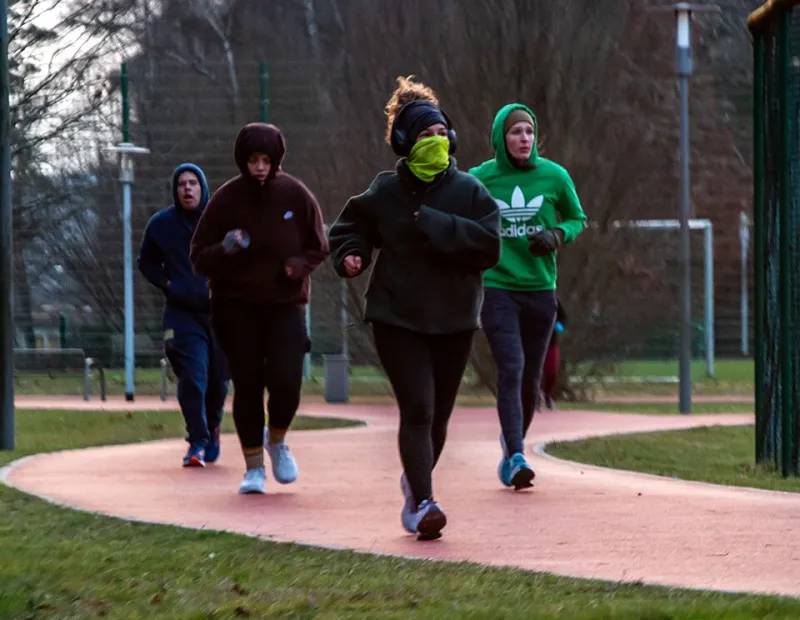
On weekend mornings, if you're near Showa Kinen Park early enough, you'll start to notice the clusters. Small groups of runners, sometimes five deep, sometimes fifteen, moving through the park's wide paths at a pace that suggests they've been doing this for years — because they have. Tachikawa's running community isn't organized by a brand or a app-based platform. It's organized by habit, mutual respect, and the kind of social glue that forms when people show up to the same place at the same time for long enough.
These groups are genuinely welcoming to newcomers, especially expats, though don't expect a formal onboarding process. You show up, you run, you maybe grab a canned coffee at a vending machine afterward. That's the whole thing. And somehow, that's plenty.
Some of these crews have started incorporating elements of trail running and urban obstacle navigation, treating Tachikawa's mix of parks, rail underpasses, and quiet residential streets like a self-designed obstacle course. It's the kind of thing that would cost you a monthly subscription fee if it were packaged and sold in Santa Monica. Here it just happens, organically, because people like running and they like running together.
Wellness That Actually Makes Sense
Beyond the sweat-heavy stuff, Tachikawa has developed a quieter but equally compelling wellness dimension. A small but growing network of independent practitioners — acupuncturists, shiatsu therapists, breathwork facilitators, and practitioners of less easily categorized Japanese healing traditions — have set up shop in the area, many of them operating out of small studio apartments or shared wellness spaces rather than formal clinics.
What's interesting about this crowd is the way they're blending traditional Japanese health philosophy with contemporary wellness thinking in ways that feel genuinely considered rather than trend-chasing. One practitioner who trained in Kyoto before relocating to Tachikawa offers sessions that combine classical shiatsu with somatic awareness exercises drawn from Western movement therapy. Her client list is a mix of local office workers managing chronic stress and expats who found her through word of mouth after burning out on the harder-edged fitness culture they'd imported from back home.
"I think people come to Tachikawa because there's less performance pressure," she said, in careful English, during a conversation near her studio. "In central Tokyo, even wellness can feel like competition. Here, people want to actually feel better. That's different."
Why Expats Are Making the Pilgrimage
The fitness-focused expat community in Tokyo has historically clustered around neighborhoods like Minato and Shibuya, where English-language gym signage and international-brand studios made the transition easier. But the calculation is shifting. As central Tokyo rents continue to climb and the novelty of boutique fitness wears off, more people are looking west — and finding that Tachikawa offers something the central wards genuinely can't replicate.
It's not just the price point, though that matters. A monthly gym membership in Tachikawa that would get you access to serious equipment and a real coaching community might run you half what you'd pay for a no-frills chain membership in Shinjuku. But more than that, it's the texture of the place. Tachikawa is a city that actually functions — markets, parks, transit, neighborhoods with character — rather than a lifestyle district built around consumption. Working out here feels like part of a life, not a product you're buying into.
There's also the Showa Kinen Park factor, which genuinely cannot be overstated. Having access to that much green space, that close to a functional urban center, changes what outdoor fitness looks like. Morning yoga in the park, afternoon cycling, evening runs along the river paths — the infrastructure for an active life is just quietly there, without anyone charging you for it.
The Scene That Doesn't Need to Be Discovered
Here's the thing about writing up a scene like this: the people in it aren't waiting for coverage. The boxing gym with no website isn't hoping to go viral. The running crews aren't looking to license their format. The wellness practitioners aren't building personal brands. There's something genuinely refreshing about a fitness culture that exists entirely for the people inside it — that measures success in how you feel on Thursday morning, not in follower counts or class attendance metrics.
Tachikawa's fitness underground isn't a movement in the branded sense. It's just a bunch of people who decided to take their health seriously in a place that makes it easy to do so without the noise. If that sounds like your kind of thing, the commute from Shinjuku is about forty minutes. Bring your own water bottle.
